

 Glass Eye Studio Lion's Mane Jellyfish Blown Glass Paperweight
Lion S Mane Jellyfish:The dangers of Lions Mane jellyfish stings. by Kate L. Romano. Regardless if you go on summer vacation near the ocean or sea are required to see at least once a jellyfish. The reason is because they are the fastest fishing multiplyingAccording The Associated Press Officer Doug marine mud of the state identified as a lion’s mane jellyfish in a species that resembles the South. Is estimated to weigh 45-50 pounds and the longest was 13 feet the tentacle. After the jellyfish has been presented to the public throughout the water began to describe the reactions, including itching and burning. Some people describe a sensation of a vise and the legs that the doctors said it was working.
About 150 people were stung by jellyfish in a state park in Rye, on Wednesday, authorities said. Parks and Recreation Department officials said the children, tourists and persons attending recreational programs in Park Wallis Sands has suffered a coup. Authorities said a lifeguard saw the jellyfish, about 100 yards offshore. He swam in a table with a pitchfork and was by his side. According to the Associated Press, Doug Grout, director of marine fisheries of the state has identified as a lion’s mane jellyfish, a species rarely seen so far south. Is estimated to weigh 45-50 pounds, and its longer tentacles was 13 feet. After the jellyfish has been submitted to the coast, people in the water began to describe reactions, including itching and burning. Some people describe a sensation of a vise and legs, doctors said the workers probably resulted from the bite of a jellyfish.
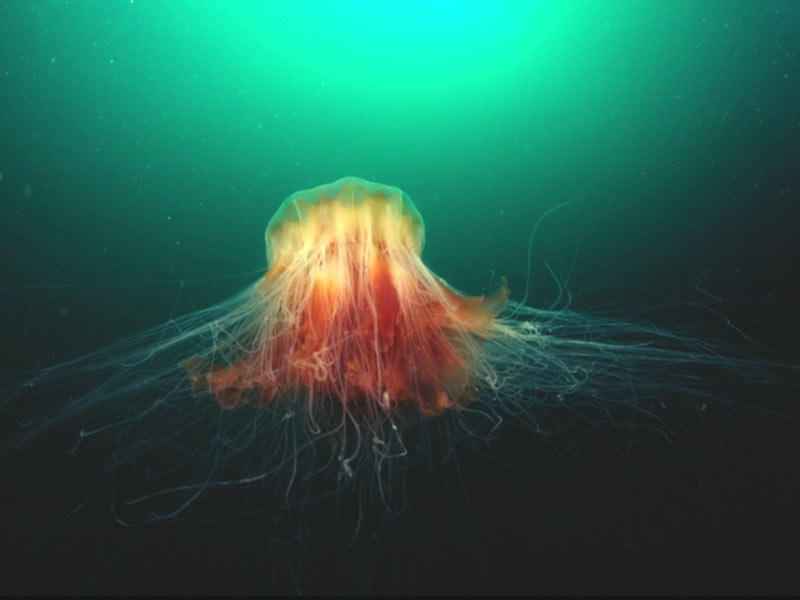
Photo copyright Tim Nicholson.
Lion's Mane Jellyfish, Cyanea capillata
Lion's Mane Jellyfish, Cyanea capillata
With tentacles up to three metres long and covered with stinging cells, it's better not to get too close to the Lion's Mane jellyfish. It's body can be up to 200 cm across making it one of the largest species of jellyfish.
The tentacles are arranged in eight bunches, with each bunch containing over 100 tentacles. The oldest tentacles are often coloured dark red. They have a very severe sting that can produce blisters, irritation, and muscular cramp and may even affect respiratory and heart function. Fragments of tentacles, left on buoy ropes for example, retain their stinging power.
This species does occasionally occur in large swarms, largely thought to be due to storms and tides that concentrate individuals together. They are predators, eating zooplankton, small fish and moon jellyfish.
You'll find the Lion's Mane in the cold Arctic and Pacific Oceans, the North and Irish Seas and around the coast of Australia. They are mostly no deeper than around 20 metres.

 Lions Mane Jellyfish Photographic Poster Print by George Grall, 30x40


Lion's Mane Jellyfish Swimming, Vancouver Island, British Columbia, Canada Collections Photographic Poster Print by Paul Nicklen, 18x24


Lions Mane Jellyfish National Geographic Collection Framed Art Poster Print by George Grall, 25x31


No comments:
Post a Comment